Rails Run Late, Contracts Don't: Underwriting Inland Variability Into Landed Cost

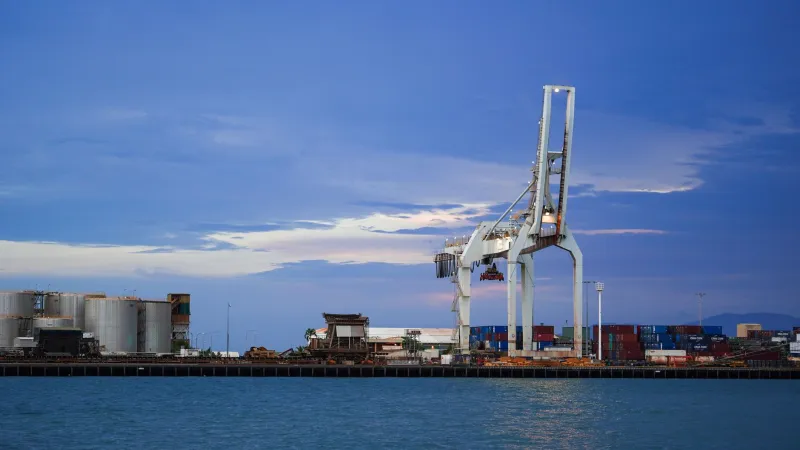
Photo by Photo by Campbell on Unsplash on Unsplash
Inland rail ramps occupy a strange place in the importer's mental model. They are treated as fixed waypoints — the container leaves the port, arrives at the ramp, and a drayage carrier picks it up — when in fact the ramp is one of the least predictable nodes in the journey. Trains arrive in blocks rather than on schedule. Containers are grounded when there is space and held when there is not. Chassis availability at the ramp is a separate variable from chassis availability at the port. And the appointment system that governs pickup can add days that never appear in a transit-time quote.
The consequence is a quiet compounding of cost: storage at the ramp, per-diem on the box, missed delivery windows at the distribution center, and expedited trucking to recover. None of it surfaces in the rate negotiation, because the rate negotiation is about the ocean leg and a notional door delivery that assumes the ramp behaves.
What On Time Actually Means at a Ramp
Railroads and ocean carriers do not measure the same events, and importers routinely conflate them. A train can arrive at the ramp on schedule and still leave a container unavailable for days, because arrival is not the same as grounding, grounding is not the same as availability, and availability is not the same as an appointment.
The useful sequence runs from train arrival, to container grounded, to available for pickup, to appointment secured, to actual gate-out. Each transition has its own distribution, and the distribution is what should be modeled. Public sources help at the aggregate level: the Surface Transportation Board's weekly service reporting, railroad performance notices, and intermodal industry volume data all indicate direction. But the ramp-level detail that matters most — how long your boxes waited, by day of week and by carrier — already sits in your own event feeds.
Building a Scorecard From Data You Already Own
Four metrics do most of the work. Arrival-to-available measures the ramp itself: how many days between train arrival and the container being ready for pickup. Appointment lead time measures how far out the first available slot sits. Chassis outcome measures the share of pickups that required a second trip or a chassis reposition. And tail frequency measures how often a container exceeds the median by more than three days.
That last metric is the one importers underweight. A ramp with a four-day median and a fat tail is more expensive than a ramp with a five-day median and a tight distribution, because the tail is what forces expedites, misses retail windows, and triggers accessorials. Score ramps on the ninetieth percentile, not the average, and score them quarterly, because ramp performance moves with volume and labor conditions.
The Four Variables That Drive Drayage Cost
Dwell at the ramp sets the clock on free time and storage. Appointment scarcity converts a one-day pickup into a three-day wait, and it tightens whenever a terminal introduces or changes a mandatory appointment system. Chassis availability determines whether the drayage carrier can execute at all, and it is often the binding constraint when terminal pools are stressed. Bunching — several trains arriving within a short window — overwhelms grounding capacity and stretches every downstream metric.
None of these variables is visible in a rate quote that prices a clean pickup.
Fallback Architecture
A rail-to-truck contingency should exist before it is needed. That means at least one alternate ramp within reasonable drayage distance, with truck-away rates pre-negotiated rather than quoted in the middle of a service failure. It means a transload option at or near the ramp for time-critical SKUs. It means a standing relationship with a drayage provider that can source capacity outside the primary pool. And it means knowing which containers on a given vessel are candidates for diversion, because the decision window closes fast.
The practical test is simple: if the ramp goes down for five days, what is the plan, who executes it, and what does it cost? Importers who cannot answer that question in a paragraph are not buying rail service. They are buying an option they have not priced.
Contract Language That Prices Reality
Ocean and intermodal contracts tend to define inland delivery in language that is generous to the carrier. Three fixes matter. First, define availability precisely, in terms of the events above, so that a container sitting ungrounded is not counted as delivered. Second, cap accessorials that arise from carrier-controlled delays, and separate them from charges caused by the importer's own pickup failure. Third, secure audit rights to the carrier's ramp performance data for the lanes you buy.
Where volume justifies it, service commitments tied to ramp dwell and appointment availability are negotiable. They are rarely offered, but they are sometimes available to importers who can show what the variability costs them.
A Worked Example
Consider an importer moving 400 containers a year through two ramps. Ramp A quotes a lower all-in rate and shows a 4.2-day median arrival-to-available, but 28 percent of containers exceed six days. Ramp B is $60 per container more expensive and shows a 5.1-day median, with only 9 percent exceeding six days.
On paper, Ramp A wins by $24,000 a year. In practice, the tail at Ramp A generates roughly 76 extra long-dwell containers. If each costs $250 in storage and per-diem and one in eight requires an expedite at $700, the tail consumes about $26,000 — more than the rate advantage, before counting missed delivery windows. Ramp B is the cheaper ramp.
The Point
Inland variability is not noise to be absorbed. It is a cost with a distribution, and distributions can be measured, modeled, and negotiated. Importers who treat the ramp as a fixed waypoint pay for it twice: once in the rate, and again in the recovery.