Rerouting Risk: How US Importers Are Mining Transshipment Intelligence to Outmaneuver Tariff Exposure
For most of the past decade, transshipment was a logistics footnote — a middle step that cargo managers tolerated rather than optimized. Containers moved from origin port to hub to destination port, and the route was largely dictated by carrier networks rather than importer strategy. That calculus has changed.
With US trade policy oscillating between sweeping tariff packages, country-specific exclusions, and retroactive rule changes, the path a container takes from factory floor to American warehouse has become a variable with genuine financial consequence. Importers who once left routing decisions entirely to their freight forwarders are now asking harder questions: Which ports touch this cargo? Under which country of origin rules is it assessed? And is there a lawful alternative that reduces our tariff burden without compromising delivery timelines?
The answers lie, increasingly, in transshipment data — and the importers who know how to read it are gaining a measurable competitive edge.
Why Transshipment Route Intelligence Has Moved to the Boardroom
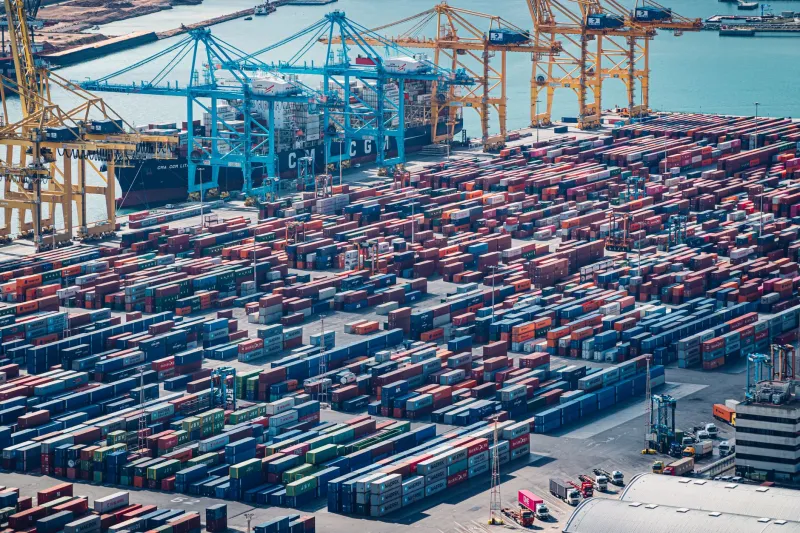
The conventional view of transshipment treats it as a carrier efficiency mechanism. Mega-vessels call at major hub ports — Singapore, Port Klang, Tanjung Pelepas, Colombo — and smaller feeder vessels distribute cargo onward to secondary destinations. From a shipper's perspective, the hub was largely invisible: cargo went in, cargo came out, and the bill of lading reflected the origin.
What has changed is the regulatory scrutiny attached to that middle leg. US Customs and Border Protection (CBP) has intensified its focus on transshipment as a potential vector for tariff circumvention, particularly in the context of Section 301 tariffs on Chinese-origin goods and the antidumping and countervailing duty orders that apply to specific product categories. As a result, the hub port a shipment passes through — and what happens to the cargo there — has become a compliance variable as much as a logistics one.
At the same time, importers have gained access to richer data than ever before. Port call records, vessel movement databases, bill of lading repositories, and carrier routing disclosures now allow sophisticated supply chain teams to model alternative transit paths with a degree of granularity that was simply unavailable five years ago. The result is a new discipline: transshipment route intelligence as a tariff risk management tool.
The Legal Framework — and Where the Gray Areas Begin
Before examining how importers are using this intelligence, it is essential to understand the legal terrain. US customs law is unambiguous on one point: the country of origin of imported goods is determined by where substantial transformation occurred — not by which ports the cargo transited. A product manufactured in Vietnam that transships through Singapore enters the US as Vietnamese-origin merchandise, regardless of how many intermediate ports it visited.
This principle creates legitimate opportunity. If a manufacturer genuinely produces goods in a country not subject to elevated tariff rates, routing that cargo through a transshipment hub — even one located in a high-tariff jurisdiction — does not alter the origin determination. The cargo remains what it is.
The gray areas emerge when the transshipment hub is used not merely as a transit point but as a location where goods are repackaged, relabeled, or subjected to minor processing intended to obscure origin. CBP's definition of "substantial transformation" requires a meaningful change in the product's character or use — not cosmetic modification. Importers who rely on transshipment hubs to launder origin rather than genuinely reroute legitimately manufactured goods are exposed to serious penalties, including seizure, back duties, and potential criminal liability under 18 U.S.C. § 542.
The compliance imperative, therefore, is straightforward: route intelligence is a legitimate tool when it reflects genuine supply chain geography. It becomes a liability when it is used to misrepresent that geography.
How Sophisticated Importers Are Building Route Optimization Frameworks
Within those legal boundaries, a number of practical frameworks have emerged among importers who are actively managing transshipment exposure.
Origin portfolio diversification. Rather than concentrating production in a single country and optimizing the exit port, importers are mapping their supplier base against tariff schedules and identifying alternative sourcing geographies. Transshipment data informs this process by revealing which hub ports efficiently connect alternative origin countries to US gateway ports — and at what cost premium relative to the tariff savings.
Hub port benchmarking. Not all transshipment hubs are created equal from a compliance standpoint. Some hubs have well-documented histories of being used for origin-washing schemes, which means cargo transiting those ports receives heightened scrutiny from CBP targeting systems. Importers using route intelligence tools are actively steering away from flagged hubs — not because they have anything to hide, but because association with high-risk transshipment nodes increases examination rates, delays, and administrative burden.
Bilateral port partnership mapping. Certain port-to-port combinations offer structural advantages — faster transit times, better feeder connectivity, or stronger bilateral trade relationships that facilitate smoother customs processing. Importers are building internal databases that score port combinations against criteria including tariff classification risk, CBP examination rates, average dwell times, and carrier reliability metrics.
Documentation architecture. When legitimate transshipment routes are used, the supporting documentation must be airtight. Bills of lading, certificates of origin, manufacturer affidavits, and production records must collectively establish an unbroken chain of custody that demonstrates where goods were made and what happened to them at each intermediate port. Importers who treat documentation as a post-hoc formality rather than a concurrent process are vulnerable even when their underlying supply chain is fully compliant.
Real-World Route Shifts That Have Delivered Results
Without identifying specific companies, the patterns that have emerged from trade data are instructive.
Importers sourcing electronics components from Southeast Asian manufacturers have increasingly shifted transshipment routing away from Chinese hub ports — not because the goods are Chinese-origin, but because routing through Chinese hubs was generating unnecessary CBP scrutiny and, in some cases, misclassification risk. By redirecting feeder cargo to Singapore or Port Klang for onward transit to US West Coast ports, these importers have maintained transit times while reducing examination rates.
In the apparel sector, importers with supplier relationships in multiple countries have used transshipment data to identify which origin-hub-gateway combinations minimize total landed cost when tariff rates, freight premiums, and port processing fees are modeled together. The optimization is rarely about a single variable — it requires simultaneous analysis of trade policy, carrier pricing, and port performance data.
Building the Internal Capability
For importers who have not yet formalized a transshipment intelligence function, the entry point is more accessible than it may appear. Several commercial platforms now aggregate vessel movement data, port call records, and trade flow statistics in formats that can be integrated with existing supply chain management systems. Customs brokers with strong compliance practices are increasingly offering route risk assessments as a service layer alongside traditional filing support.
The more consequential investment is organizational: ensuring that trade compliance, logistics, and sourcing functions are sharing data and coordinating decisions rather than operating in parallel silos. Transshipment route optimization is not a logistics problem or a compliance problem — it is both simultaneously, and it requires both disciplines at the table.
As trade policy continues to evolve — and there is little evidence that the volatility will subside in the near term — the importers who treat their container's journey as a strategic variable rather than a fixed cost will be better positioned to absorb policy shocks without operational disruption. The route matters. The data to understand it is available. The question is whether your organization is using it.