When the Port Performs and the Delivery Doesn't: Closing the Final-Mile Gap in US Import Logistics
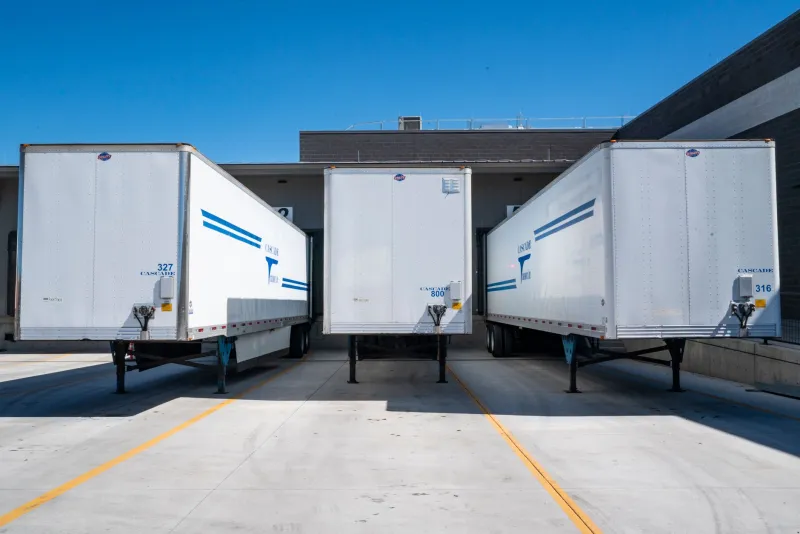
There is a particular frustration reserved for the importer who watches a container move with near-perfect efficiency through one of America's busiest terminals — cleared by Customs, released on time, picked up without incident — only to see it stall, misdeliver, or arrive damaged somewhere between the port gate and the final consignee. The port did its job. The documentation was clean. The metrics looked excellent. And yet, the shipment failed.
This is the last-mile paradox: a supply chain measured obsessively at its most visible nodes while its most consequential handoff goes largely unexamined.
The Measurement Illusion
US importers have become sophisticated consumers of port performance data. Dwell times, berth utilization rates, gate transaction speeds, and chassis availability figures are now standard inputs in many logistics planning cycles. The investment in this visibility is not misplaced — port congestion has real and measurable costs, and the lessons of the 2021–2022 West Coast bottlenecks are still fresh.
But the analytical infrastructure most importers have built stops at the terminal gate. Once a container is picked up by a drayage carrier or a contracted trucker, the data trail frequently thins. Delivery confirmation may not arrive until hours after the fact. Exceptions — missed appointments, refused deliveries, address discrepancies — often surface through customer complaints rather than proactive alerts.
The result is a measurement illusion: a supply chain that appears well-managed because the parts being measured are performing, while the unmeasured segment quietly accumulates failures.
Where the Handoff Breaks Down
The transition from port terminal to final destination involves a layered set of operational dependencies, each carrying its own failure modes.
Carrier Fragmentation: The drayage market serving most US port cities is highly fragmented, composed largely of small owner-operator fleets. While this structure provides flexibility, it also limits the technology adoption and operational standardization that larger carriers bring. Real-time tracking, electronic proof of delivery, and exception management protocols vary enormously from one drayage provider to the next.
Appointment System Misalignment: Many distribution centers and warehouses operate on strict appointment windows. When a drayage pickup runs long — due to terminal congestion, chassis delays, or driver availability — the downstream appointment may be missed entirely. Rescheduling can add 24 to 72 hours to delivery timelines, a lag that rarely appears in any port performance report.
Contractual Ambiguity: Freight contracts frequently specify performance standards for ocean carriage and port handling while leaving final-mile obligations loosely defined. Liability for missed deliveries, re-delivery fees, and storage costs at destination facilities is often disputed precisely because the original agreement did not anticipate these scenarios with sufficient specificity.
Warehouse Receiving Constraints: The receiving capacity of a destination facility is a variable that most importers treat as fixed. In practice, staffing shortages, dock equipment failures, and competing inbound freight can render a warehouse temporarily unable to accept a delivery — even when the trucker arrives on time. Without a clear escalation protocol, the driver waits, detention charges accumulate, and the importer absorbs costs that originated entirely outside the port ecosystem.
Case Illustrations: Clean Port, Broken Delivery
Consider a mid-sized consumer goods importer routing freight through the Port of Savannah — one of the most operationally consistent container terminals on the East Coast. Over a six-month period, this importer's port metrics were strong: average dwell time well below the national benchmark, no significant demurrage exposure, and consistent chassis availability through their equipment provider.
Yet an internal audit revealed that nearly 18 percent of shipments experienced a delivery exception of some kind after terminal release. The majority involved missed warehouse appointments caused by drayage delays unrelated to port performance — primarily driver shortages and traffic congestion on I-16 and I-95. A smaller but costly subset involved destination warehouses that had changed their receiving hours without notifying the freight coordinator.
In a separate case involving a West Coast electronics importer using the Port of Long Beach, a batch of high-value components cleared Customs and was released to a contracted carrier within the target window. The carrier, a small regional trucker, experienced a vehicle breakdown en route. The importer had no real-time visibility into the shipment's status and did not learn of the delay until the consignee reported a missed production window. The financial impact — expedited air freight to compensate, plus a customer penalty clause — exceeded the total ocean freight cost for that shipment.
Neither failure had anything to do with port operations. Both were entirely preventable with better last-mile infrastructure.
Diagnosing Your Own Final-Mile Exposure
Importers serious about closing this gap should begin with an honest audit of their post-gate operations. The following diagnostic questions provide a useful starting framework.
Visibility: Does your organization have real-time tracking on shipments from the moment of terminal release through delivery confirmation? If your answer depends on carrier-specific portals that require manual login, the answer is effectively no.
Carrier Qualification: How are your drayage and final-mile carriers vetted? Are technology capabilities — GPS tracking, electronic logging, exception alerting — part of your carrier qualification criteria, or are selections made primarily on rate?
Appointment Coordination: Is there a single point of accountability for managing delivery appointments and rescheduling when exceptions occur? Or does this responsibility fall between your freight forwarder, your carrier, and your warehouse team with no clear owner?
Contract Specificity: Do your transportation agreements define performance standards and liability allocation for the final-mile segment with the same rigor applied to ocean and port terms? If not, your exposure in a dispute is substantial.
Exception Escalation: When a delivery fails — missed appointment, refused load, damaged goods — how quickly does your organization learn about it, and what is the documented escalation path? Time elapsed between a delivery failure and your awareness of it is a direct measure of your operational vulnerability.
Building Accountability Into the Final Mile
Addressing last-mile fragility is not primarily a technology problem, though better tools help. It is fundamentally a governance problem — a question of who owns each segment of the delivery chain and what standards they are held to.
Leading importers are approaching this in several ways. Some are consolidating their drayage relationships around a smaller number of carriers with demonstrated technology capability, accepting a modest rate premium in exchange for meaningful visibility. Others are embedding final-mile performance requirements directly into their freight contracts, with measurable KPIs and defined remedies for non-performance.
A growing number are also investing in closer coordination with their destination facilities — treating warehouse receiving capacity as a logistics variable to be actively managed rather than a fixed constraint to work around. This means regular communication between the import team and warehouse operations, shared visibility into inbound freight timelines, and contingency protocols for receiving disruptions.
The Port Is Not the Finish Line
Port efficiency is a genuine and important operational goal. The work that has gone into improving terminal throughput, reducing dwell times, and modernizing gate systems at major US ports represents meaningful progress for the import community. None of that investment should be dismissed.
But a container that clears the terminal on schedule and fails to reach its destination on time has not been successfully delivered. The finish line is not the port gate — it is the loading dock, the distribution center, the retail floor, or the manufacturing line where that cargo is actually needed.
Importers who build their logistics strategies around port metrics alone are, in effect, optimizing for the wrong destination. The final 50 miles are not a footnote to the supply chain. For the customer waiting on the other end, they are the only miles that ultimately matter.


