Hidden in the Hub: How Regional Transshipment Is Both Saving and Bleeding US Importers
There is a persistent assumption running through US import logistics that direct port delivery is the gold standard — the cleanest line between origin and destination, with the fewest variables in play. That assumption is not wrong, exactly. But it is increasingly incomplete.
Over the past several years, the expansion of regional transshipment infrastructure across the Caribbean Basin and Central America has introduced a more complex routing calculus. Ports such as Manzanillo International Terminal in Panama, Freeport Container Port in the Bahamas, and Kingston Container Terminal in Jamaica now function as sophisticated relay nodes for cargo moving toward the US East and Gulf Coasts. For some importers, these hubs represent a genuine competitive advantage. For others, they are quietly absorbing margin that no one has bothered to account for.
Understanding which category your operation falls into requires more than a surface-level rate comparison. It requires a structured examination of the full cost architecture behind hub-and-spoke routing — and an honest assessment of where your cargo profile actually fits.
What Transshipment Is Actually Doing to Your Cost Structure
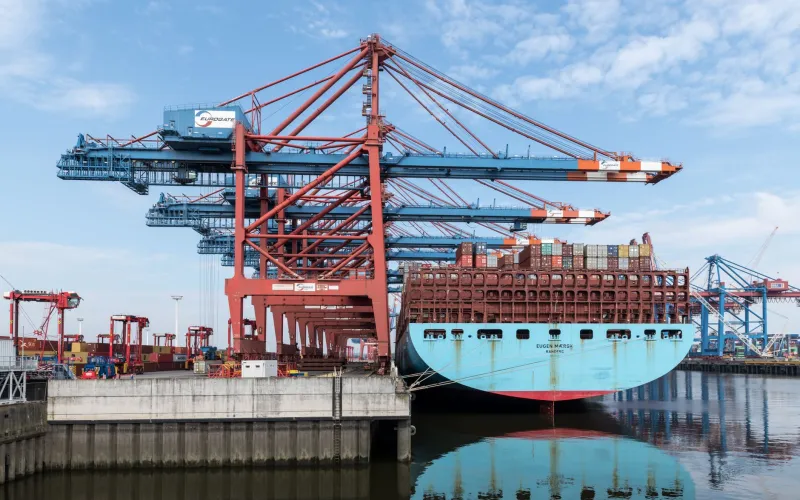
At its most basic, transshipment involves offloading cargo at an intermediate port, transferring it to a feeder or connecting vessel, and completing delivery to a final destination that the originating mainline vessel either does not serve directly or does not serve efficiently. The logic is straightforward: large container ships achieve their lowest per-unit costs at scale, and scale requires consolidating volume through high-capacity nodes rather than dispersing it across dozens of smaller destination ports.
For carriers, this model is economically essential. For shippers, the benefits are more conditional.
When transshipment works in an importer's favor, it typically does so in one of three ways. First, it enables access to mainline vessel economies — meaning that cargo originating from a port with limited direct US service can connect to a high-frequency, high-capacity routing via a regional hub at a lower all-in freight cost than a direct but infrequent alternative would provide. Second, it can reduce transit variability by funneling cargo through a hub with robust scheduling infrastructure, effectively smoothing out the inconsistencies of origin-port service. Third, for importers targeting secondary US ports — smaller Gulf Coast terminals or East Coast facilities outside the major gateway clusters — transshipment can provide connectivity that simply does not exist on direct routes.
The problem emerges when importers apply hub routing indiscriminately, without accounting for the costs that accumulate in the transfer.
Where the Margin Goes
Transshipment is not a neutral transit event. Every hub port call introduces a set of cost variables that direct routing eliminates by definition. These include terminal handling charges at the intermediate port, additional port dues, feeder vessel freight, and — critically — time.
Time is often the most underestimated cost in transshipment analysis. A cargo movement that adds two to four days of transit through a Caribbean hub may appear acceptable on paper, but when that additional dwell time intersects with tight delivery windows, just-in-time inventory models, or peak-season port congestion at the final US destination, the downstream financial impact can be substantial. Missed receiving appointments, additional chassis rental days, and warehouse slot penalties are not line items that appear on a freight invoice. They appear on operational P&L statements, often without any clear attribution to the routing decision that caused them.
There is also the matter of cargo integrity. Each additional vessel transfer is a handling event, and handling events introduce risk. For high-value, fragile, or time-sensitive cargo categories, the probability-weighted cost of damage or delay may render transshipment economically irrational even when the nominal freight rate appears favorable.
The Routes That Deserve a Second Look in 2025
Several specific trade corridors are worth scrutiny for US importers currently relying on hub routing without having recently stress-tested that decision.
Asia-to-US East Coast cargo transshipping through Panama or Jamaica deserves particular attention following recent shifts in mainline vessel deployment. As carriers have adjusted their alliance structures and vessel cascading strategies in response to Red Sea disruptions and Panama Canal draft restrictions, the frequency and reliability of feeder connections at certain Caribbean hubs have changed materially. Importers who locked in transshipment-dependent routing agreements in 2022 or 2023 may be operating under assumptions that no longer reflect current service realities.
Similarly, Latin American origin cargo — particularly from Colombia, Ecuador, and Peru — is increasingly subject to routing decisions that default to hub transshipment when direct US Gulf Coast service has actually improved in frequency and rate competitiveness. The growth of direct service to ports such as Houston, New Orleans, and Mobile means that the transshipment premium for this origin region is no longer automatically justified.
Conversely, importers moving cargo from Southeast Asian origins to secondary East Coast ports — Wilmington, North Carolina; Portsmouth, Virginia; or Jacksonville, Florida — may find that transshipment through Freeport or Kingston continues to offer genuine schedule reliability advantages that direct service cannot match, particularly for cargo that does not justify full charter economics.
Building a Routing Decision Framework
The importers who manage transshipment most effectively are those who have moved beyond treating it as a carrier-determined default and toward treating it as an active decision variable with defined evaluation criteria.
A functional framework for that evaluation should incorporate at minimum four analytical dimensions: total landed cost inclusive of all terminal handling and feeder charges, transit time reliability measured against actual schedule performance data rather than published schedules, cargo risk profile relative to the additional handling exposure, and final destination service frequency from the hub versus direct alternatives.
Logistics teams that run this analysis regularly — rather than at contract renewal intervals only — tend to identify routing inefficiencies that compound significantly over annual import volumes. A difference of $80 to $120 per container in transshipment-related costs may appear inconsequential on a single shipment. Across 500 annual containers, it represents a six-figure budget line that could be recovered or redeployed.
The Carrier Relationship Factor
One dimension that rarely surfaces in formal routing analyses but consistently influences outcomes is the quality of the importer's relationship with the carriers operating their transshipment hubs. Hub ports function on a priority logic that is not always transparent: when feeder vessel capacity is constrained, cargo from shippers with stronger carrier relationships or larger volume commitments tends to move first.
For smaller importers relying on transshipment without meaningful carrier leverage, this dynamic can manifest as unexplained delays, rolled cargo, and extended hub dwell times that erode whatever cost advantage the routing initially offered. Understanding this reality — and either building the carrier relationship necessary to mitigate it or selecting routing alternatives that reduce exposure to it — is a strategic consideration that belongs in any honest transshipment evaluation.
Making the Routing Decision Deliberately
Transshipment through Caribbean and Central American hubs is not inherently advantageous or disadvantageous. It is a routing structure with a specific cost and risk profile that aligns well with some cargo movements and poorly with others. The importers absorbing unnecessary margin loss through hub routing are, in most cases, not making bad decisions — they are making default decisions, which is a different problem.
The correction does not require abandoning transshipment as a tool. It requires treating it as a tool that demands deliberate application: evaluated against current data, calibrated to actual cargo profiles, and revisited as carrier networks and trade lane economics continue to evolve through 2025 and beyond.
For US importers committed to recovering margin from their logistics operations, the routing decision is rarely the most dramatic lever available. But it is frequently among the most consistently overlooked.