Beyond the Big Gateways: A Practical Guide to Secondary Port Arbitrage for US Importers
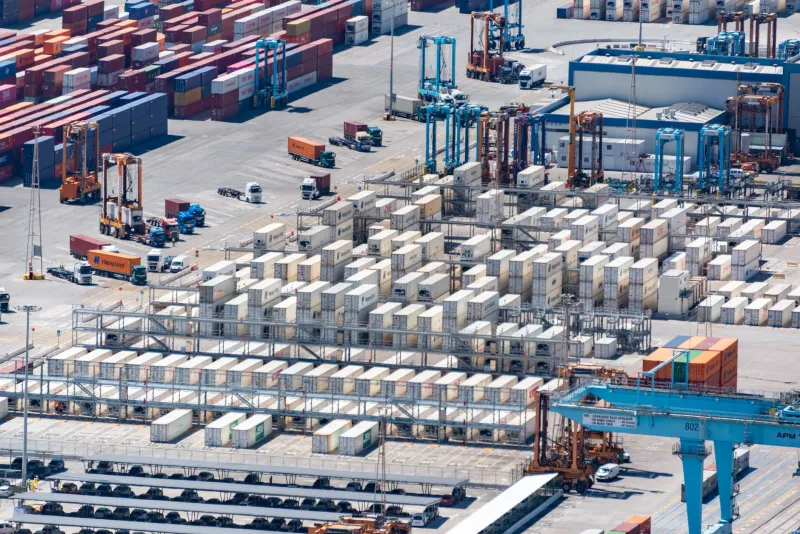
For decades, US importers have defaulted to a predictable shortlist. Los Angeles and Long Beach handle the Pacific. New York and New Jersey anchor the East Coast. Houston commands the Gulf. These three gateway clusters process the overwhelming majority of containerized cargo entering the United States, and for most shippers, the logic of concentration has been self-reinforcing: carrier frequency is highest, customs infrastructure is most developed, and inland connections are broadest.
But that logic is showing cracks. Chronic congestion, escalating terminal handling charges, and unpredictable dwell times at the nation's largest ports have created an opening that smaller facilities are actively exploiting. From the Port of Baltimore to Savannah's inland extensions, from the Port of Virginia to emerging Gulf Coast alternatives like Mobile and Freeport, secondary and tertiary ports are competing on a value proposition that deserves serious evaluation — not reflexive dismissal.
The question for mid-market importers is not whether alternatives exist. They do, and in growing number. The question is whether the savings are real, durable, and actually accessible given your specific cargo profile, distribution network, and compliance obligations.
Why Secondary Ports Are Gaining Ground
The competitive push from smaller ports is not accidental. State port authorities and terminal operators at secondary facilities have made deliberate investments over the past several years in customs processing capacity, chassis availability, on-dock rail connections, and technology infrastructure. The Port of Virginia, for instance, has invested heavily in automated terminal operations that have materially reduced gate transaction times. The Port of Baltimore has positioned itself as a ro-ro and breakbulk specialist while also expanding container capacity. Mobile, Alabama has leveraged its proximity to southeastern manufacturing corridors as a genuine differentiator for importers with distribution points in Tennessee, Georgia, and the Carolinas.
At the same time, the major gateways have struggled to fully absorb post-pandemic volume surges, labor uncertainty, and the sheer scale of vessel upsizing by major carriers. Port congestion at Los Angeles and Long Beach regularly pushes vessel anchorage times into double digits during peak periods. Terminal dwell times that should measure in hours sometimes stretch into days. The cumulative cost — in demurrage exposure, missed delivery windows, and working capital tied up in floating inventory — is substantial.
For an importer moving 500 to 2,000 TEUs annually, even a modest improvement in dwell time and terminal handling fees can represent meaningful savings per container. The arithmetic starts to look interesting before you even factor in reduced congestion risk.
Where the Genuine Savings Are
The ports most consistently delivering measurable cost advantages to mid-market importers tend to share a few characteristics: they have invested in customs processing capacity that keeps pace with container volumes, they maintain better chassis-to-container ratios than the mega-gateways, and they have cultivated strong relationships with regional drayage networks.
The Port of Virginia stands out on customs processing metrics. Its integrated terminal management systems and strong CBP staffing ratios have produced release times that frequently undercut New York/New Jersey on comparable cargo categories. For importers whose goods clear without examination — the majority of commercial shipments — the speed advantage translates directly into lower storage and dwell fees.
Savannah, while no longer a small port by any measure, continues to offer meaningful advantages over the California gateways for importers with southeastern distribution networks. The combination of on-dock rail, proximity to major inland logistics hubs, and competitive terminal rates makes it a compelling option for cargo that would otherwise transit Los Angeles and move east by intermodal.
Mobile and Freeport, Texas represent a more specialized case. Their value proposition is strongest for importers sourcing from Latin America or the Caribbean, where vessel services are structured to call Gulf ports directly. The carrier network limitations are real, but for the right trade lanes, the combination of lower terminal fees, faster gate processing, and shorter drayage distances to southeastern and south-central distribution points can produce genuine landed cost advantages.
Where the Hidden Complications Emerge
The savings case for secondary ports weakens considerably under certain conditions that importers should evaluate honestly before committing to a diversion strategy.
Carrier service frequency is the first constraint. The major gateways attract the broadest range of vessel services precisely because volume density makes them commercially attractive to carriers. Secondary ports, by definition, have fewer weekly sailings from key origin ports. For importers managing tight replenishment cycles or responding to demand signals with short lead times, reduced sailing frequency can impose inventory carrying costs that dwarf any terminal fee savings.
Intermodal connectivity is the second variable. Los Angeles and Long Beach sit at the western terminus of the two most heavily utilized transcontinental rail corridors in North America. New York/New Jersey feeds directly into dense northeastern rail and trucking networks. Importers diverting to secondary ports must carefully map the full inland move, including chassis availability at destination, drayage carrier depth, and the reliability of rail connections where applicable. A port with excellent terminal metrics but a thin regional drayage market can produce worse door-to-distribution-center performance than a congested gateway with deep carrier networks.
Customs examination rates and infrastructure depth represent a third consideration. While secondary ports have improved their CBP processing capacity, a cargo examination at a smaller facility can produce longer resolution times simply because the supporting ecosystem — customs brokers, examination facilities, freight stations — is less developed. For importers with complex commodity classifications or elevated examination risk profiles, this is a material factor.
Building a Diversion Decision Framework
The importers extracting consistent value from secondary port strategies share a disciplined approach to the decision. Rather than making port selection a reactive response to congestion at primary gateways, they treat it as a structured analysis anchored to their specific distribution geography, carrier relationships, and cargo characteristics.
A workable framework starts with landed cost modeling that captures the full door-to-DC cost, not just terminal fees. Terminal handling charges, chassis costs, drayage rates, intermodal line-haul, and the probability-weighted cost of delays should all be included. Importers who stop at the terminal gate are systematically underestimating the true cost of port selection.
The second element is carrier service mapping. Before committing volume to a secondary port, verify that the sailing frequencies available on your origin-to-destination trade lane are sufficient to support your replenishment model. A 15% reduction in terminal fees does not compensate for a weekly sailing that misses your inventory replenishment window.
Third, engage your customs broker in the analysis. Brokers with established relationships at secondary ports can provide realistic estimates of processing times and examination risk at those facilities. Their operational knowledge is frequently more current and granular than published port metrics.
Finally, consider piloting diversion strategies with a defined subset of SKUs or shipments before committing your full volume. Secondary port performance can vary by season, carrier, and commodity type. A structured pilot generates the operational data needed to make a durable, informed routing decision.
The Honest Assessment
Secondary port arbitrage is neither a universal solution nor a niche strategy reserved for specialists. For mid-market importers with southeastern or south-central distribution networks, favorable commodity profiles, and the operational flexibility to manage reduced carrier frequency, the savings are real and the case is compelling. For importers dependent on transcontinental rail, high-frequency vessel services, or deep customs broker ecosystems at destination, the major gateways retain genuine advantages that smaller ports cannot yet replicate.
The discipline lies in doing the full math — port to warehouse, not port to gate — and letting the numbers guide the routing decision rather than defaulting to convention or reacting to the most recent congestion event. In a trade environment where every basis point of landed cost matters, that discipline is increasingly the difference between importers who manage their logistics costs and those who absorb them.